Types of removal orders

April 1, 2026 · 1:31 pmBlogImmigration
Types of removal orders

To build a proper defence against an immigration removal order, one has to understand that there are several types of removal orders and they are issued under different sections of the legal statute, the Immigration and Refugee Protection Act (IRPA). When my clients call me saying that they are about to be deported, I always ask them to show me the report of the immigration authorities as I want to know whether my client is to be deported, is ordered to depart from Canada, or has an exclusion order.

When an immigration officer receives a report under s.44 of the IRPA (meaning that it is believed that a foreign national or permanent resident is inadmissible in Canada), they may make a removal order. In some cases, there is no need to further refer the matter for an admissibility hearing to the Immigration Appeal Division (except in cases where a permanent resident is involved, with some exceptions to residency requirements).

Types of Removal Orders in Canada & How to Appeal Them

When a foreign national is determined to be inadmissible for serious criminality, misrepresentation, or failure to obtain authorization to enter Canada, they are issued a deportation order.

In a case when a foreign national is inadmissible for failure to appear for further examination or an inadmissibility hearing, failure to establish that they hold a visa, failure to leave Canada at the end of their legal stay, or failure to comply with certain conditions, an exclusion order is issued.

The family members of the person affected by any type of removal order become subject to the same conditions.

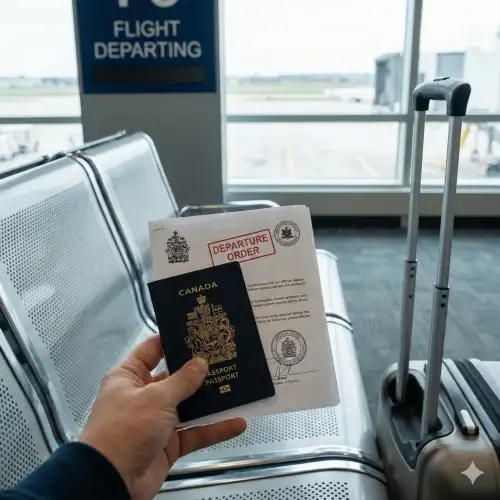
A departure order is issued when, for example, a refugee claimant loses their case and is subject to leave Canada, or a foreigner whose permit has expired. A foreign national who receives a departure order must leave Canada within 30 days voluntarily. If they leave Canada within 30 days, they can return in the future without prior formal authorization. If, however, there is a breach in compliance with a departure order, it evolves into a deportation order.

Exclusion order: After the exclusion order is issued and the person affected leaves Canada, they can return only after obtaining prior authorization and within one year after the order was enforced. If one left Canada because of an exclusion order, they must obtain authorization to return within two years after the order was enforced.

Deportation order: To return to Canada at any time in the future, after the enforcement of the order, the person affected must obtain authorization to return.


Which removal order applies to you — and why it matters

The three removal orders in Canada carry very different long-term consequences. A departure order generally lets you return without special permission if you leave within 30 days and confirm your departure (otherwise it becomes a deportation order). An exclusion order typically bars return for one year (or five years for misrepresentation). A deportation order is the most serious and bars return permanently unless you obtain an Authorization to Return to Canada (ARC).

If you have received any enforcement document, act immediately — appeal and stay deadlines are short. Where a removal order can be appealed to the Immigration Appeal Division (IAD), a licensed paralegal at Karb Law can represent you at that hearing.

FAQ

Frequently asked questions

What is the difference between a departure order and a deportation order?

A departure order lets you return to Canada in future without special authorization if you leave on time and confirm your departure; a deportation order bars you permanently unless you obtain an Authorization to Return to Canada (ARC). An unconfirmed departure order automatically becomes a deportation order.

Can I appeal a removal order?

Many removal orders can be appealed to the Immigration Appeal Division (IAD) of the Immigration and Refugee Board, and some can be challenged at an admissibility hearing. Deadlines are short, so get advice as soon as you receive the order.

How long does an exclusion order stay in effect?

An exclusion order usually prevents return for one year, or five years where it was issued for misrepresentation.

Official resources

External links are provided for general information only and are not legal advice.

Angelina Shuster — Licensed Paralegal, Karb Law
Written by

Angelina Shuster

Licensed Paralegal · Law Society of Ontario

Angelina Shuster is a paralegal licensed by the Law Society of Ontario with 25 years of experience in Canada. Based at Karb Law’s office in Richmond Hill, she represents clients across Ontario and in immigration matters throughout Canada, and has helped thousands of people with immigration and legal matters — refugee claims, appeals, admissibility and detention reviews before the Immigration and Refugee Board, and summary-conviction criminal matters.

More about Angelina & Karb Law →
Keep Reading

Related Articles

Who Can Enter and Remain in Canada

Who Can Enter and Remain in Canada

Canadian citizens have an unconditional right to enter and return to Canada following travel abroad. Permanent residents also have the right to return to Canada, ...

Read More
March 25, 2026
Misrepresentation

Misrepresentation

Misrepresentation on an immigration application to Canada, such as omitting relevant facts, submitting fraudulent documents, misstating marital status, or failing to disclose the existence of ...

Read More
March 4, 2026

Request a Consultation

Fill out the form below and our legal team will get back to you shortly.

Contact us

Google Google Rating
4.7★★★★★Based on 24 reviews
Google
Google Rating
4.7★★★★★
Based on 24 reviews